
Maximise Pump Performance and Service Life
Whether the challenge is energy losses in magnetic-drive pumps, high pressures, aggressive media placing high demands on chemical pumps, extreme temperatures or severe wear: Rauschert develops long service ceramic components customised to the application. Our expertise ranges from containment shells, pistons, gears and plain bearings to shafts, thrust washers, valves and tailor-made solutions. We support our customers from material selection and component design through to reliable series production.
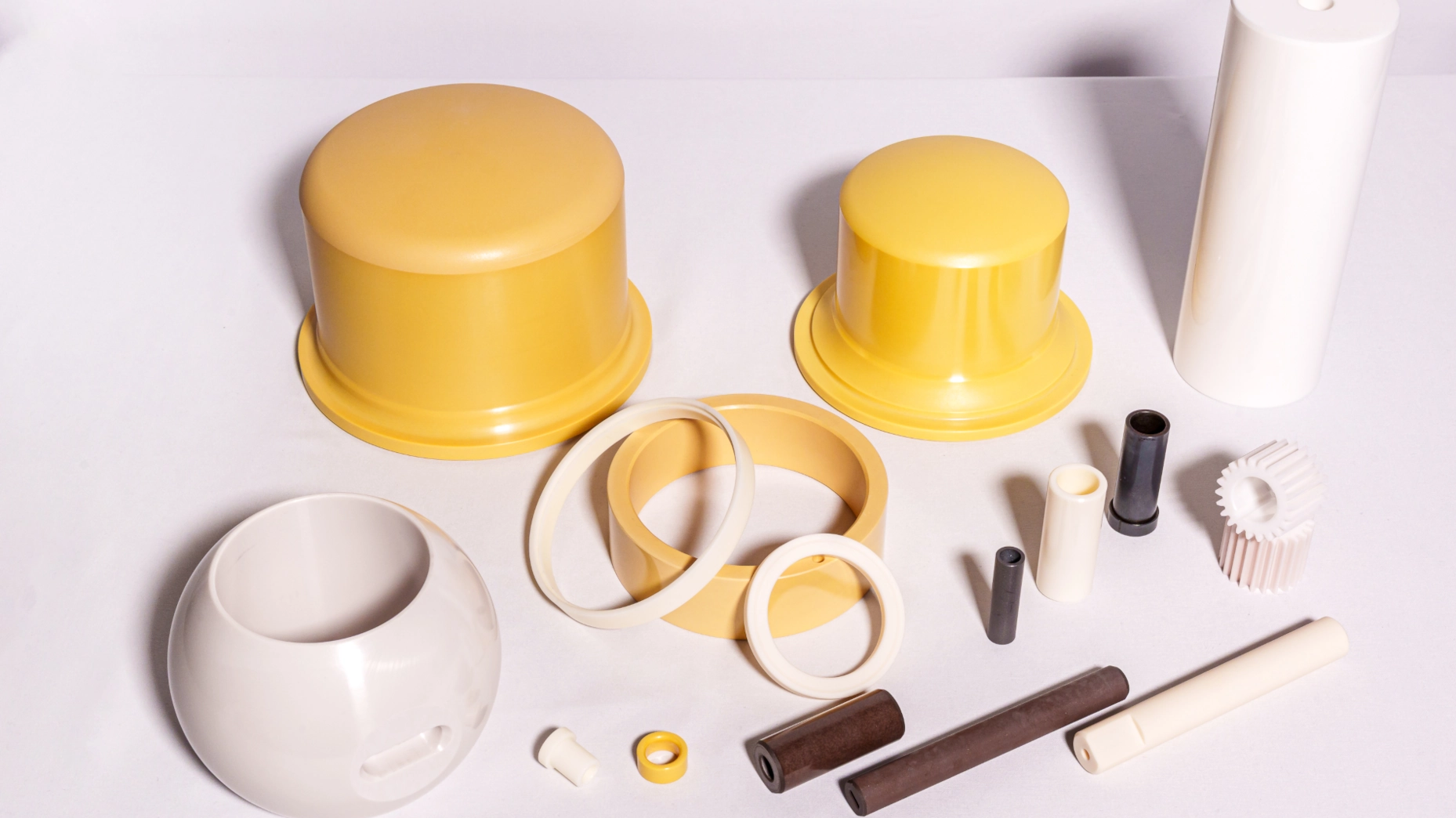
Your advantages - Pump Components Made of High-Tech Ceramics
High Purity Alumina Oxide - Zirconia - Ceramic Composites
- Excellent corrosion resistance
- High temperature resistance up to 1,800°C
- Good wear resistance
- High pressure resistance up to 3,500 MPa
- High hardness up to HV1 2,000
- Lower density between 3.0 and 6.0 g/cm³
- Non-magnetic
- Best surface quality Ra 0.03µ
- Optimal joining technology (metal/ceramic composite)
Wide range of materials for a variety of applications. Thanks to their robustness and resistance to wear, corrosion, and high temperatures, ceramic components from Rauschert have a long service life, which reduces maintenance costs and downtime.
Our experts are always available to provide you with further advice.
Ceramic products for the pump industry
Solutions that lower Pump Operating Costs
Our high-quality products improve the operational reliability of your equipment, minimise downtime, and reduce maintenance and repair costs.
Depending on pump type, pumped medium and operating conditions, different requirements take priority. Technical ceramics offer advantages at high pressures, with aggressive media, under severe wear, during extreme temperature fluctuations and for precise functional surfaces.
Our ceramic solutions can help with:
- reducing energy losses in magnetic-drive pumps
- high pressures and precise metering applications
- protecting chemical pumps from aggressive and corrosive media
- high requirements for wear resistance and service life
- high and low operating temperatures exceptionally low and high temperature pumps
- customised tailor-made component and material solutions
Which product for which application?
| Application | Typical Challenge | Suitable Products |
Magnetic-drive pumps | Eddy-current losses, heat | |
High-pressure pumps | Pressure, wear | |
Gear pumps | Abrasion, corrosion | |
Metering pumps | Precision, media resistance | |
Circulation pumps | Continuous operation, friction |
Do you have any further questions? You are also welcome to visit the FAQ-Section for our pump products and components.
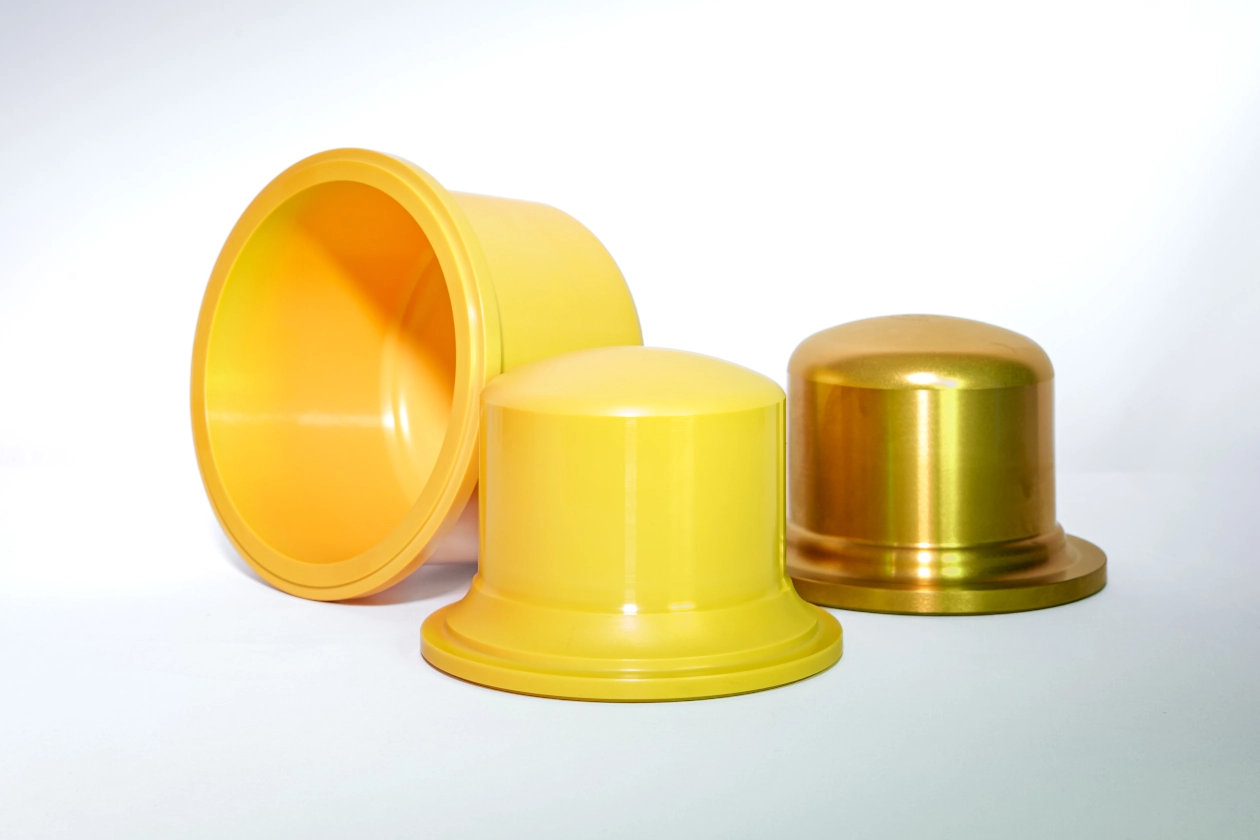
Ceramic Containment (Isolation) Shells
Reducing Energy Costs in Magnetically Coupled Pumps
Our Magnesia stabilised Zirconia containment shells optimally transfer the power of the magnetic coupling without eddy current losses in magnetic drive pumps and do not transfer any temperatures to the product. Our material is non-magnetizable and electrically non-conductive, thus preventing power losses. Safe use is also guaranteed at high temperatures. Non-metallic containment shells remain dimensionally stable even at high temperatures (approx. 450°C) or high pressures (up to 90 bar). Further details can be found in our flyer.
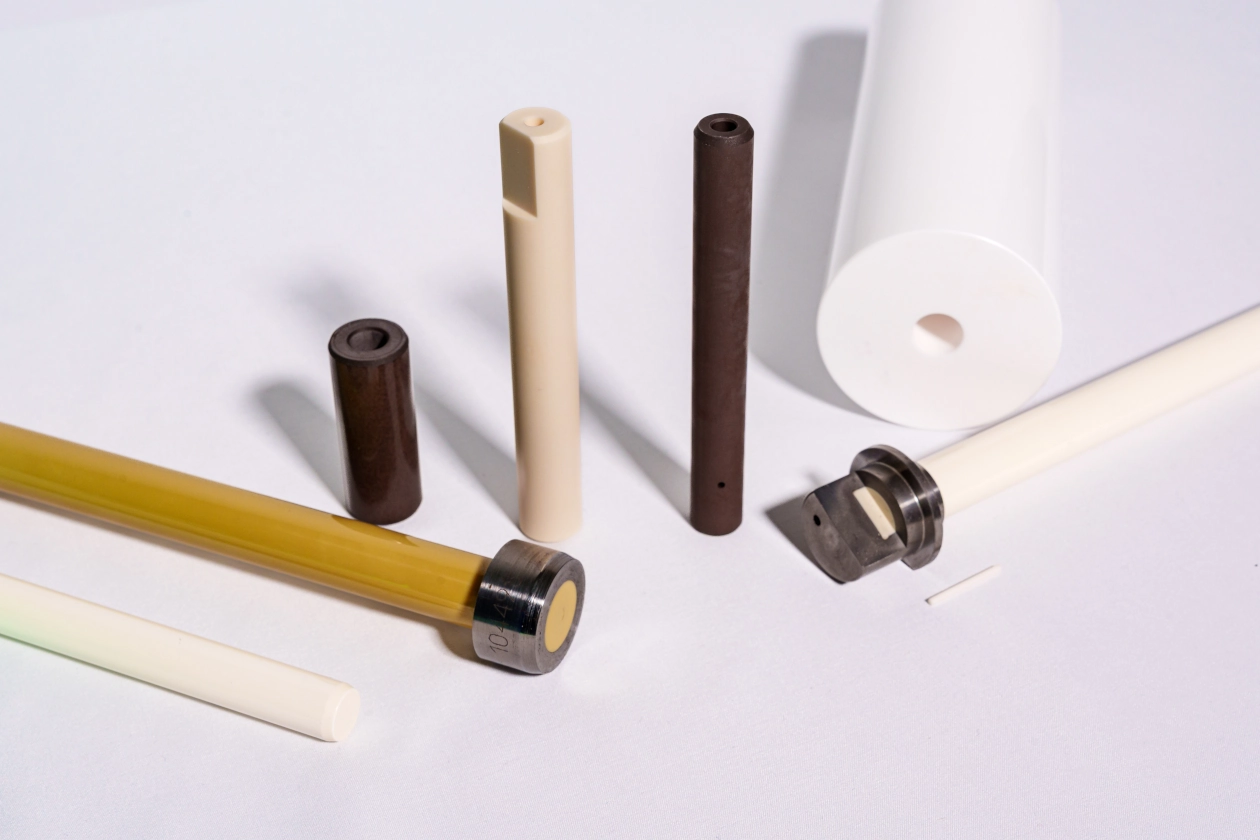
Pistons/Plungers
with possibility of precision surface finishing
Our ceramics offer high surface quality, which results in low sliding resistance, thus protecting your seals. Our products are also wear-resistant, leading to a long service life of your equipment. Our pistons and plungers can be used for pressures up to 10,000 bar. Operating times of more than 2,000 hours have been achieved even when used at 3,000 bar. The weight of our ceramics is approximately ⅓ that of carbide, meaning less mass has to be accelerated and decelerated in the pump, which protects its drive.
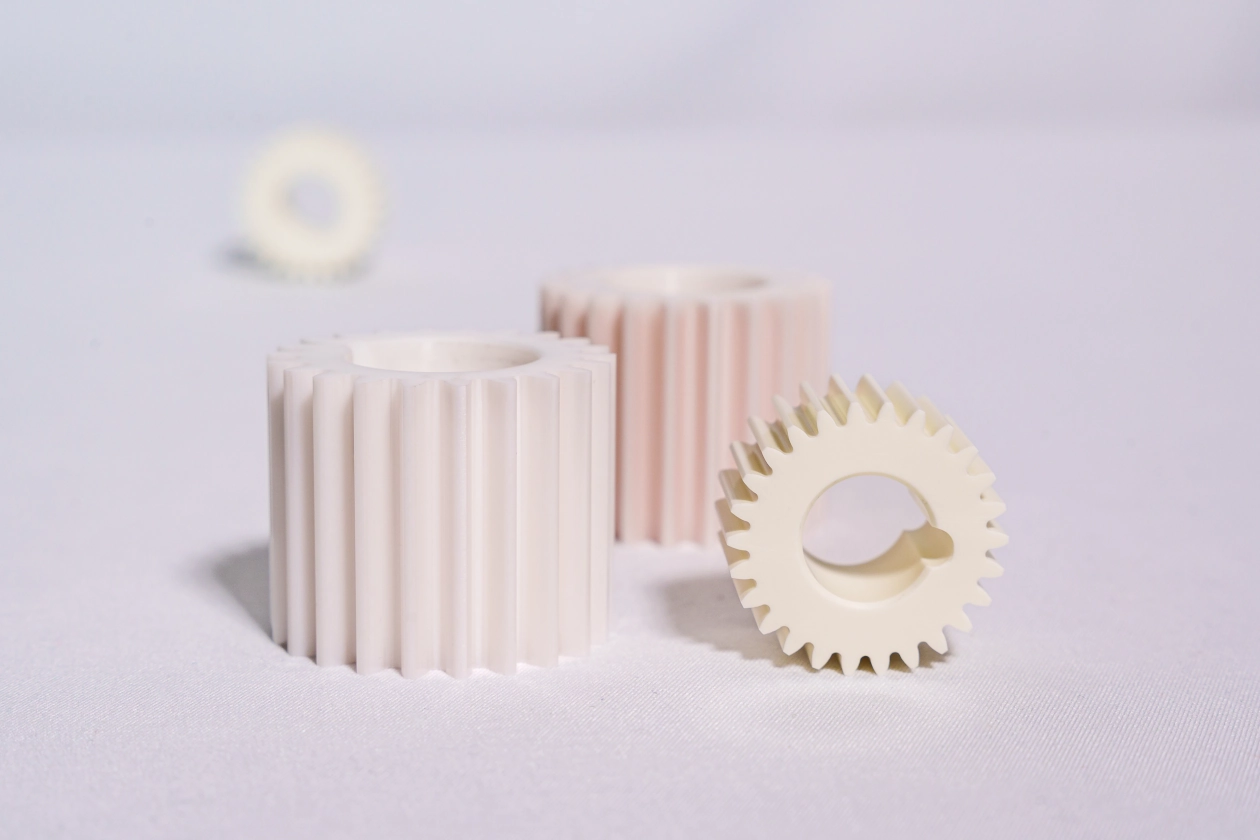
Ceramic gears
High-precision light-weight gears for extreme loads
Ceramic gears are ground with maximum precision and significantly increase the service life of gear pumps. Pressures of 300-400 bar are easily achieved with ceramic. Due to their high hardness, ceramic gears do not deform under the most difficult operating conditions; they remain dimensionally stable. Corrosive media do not attack our materials. The tooth geometries do not change over long periods of time and there is no play between the tooth flanks. Minimal leaks remain constant over the entire service life.
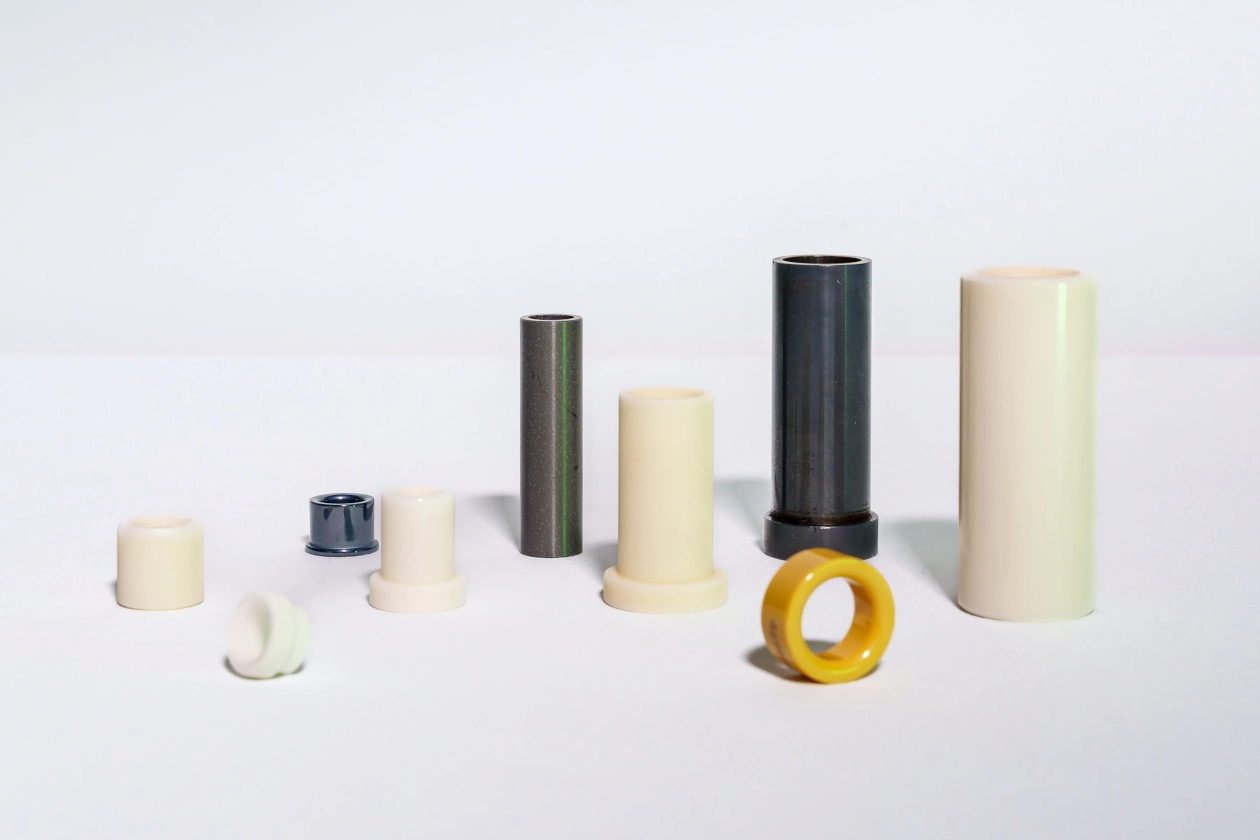
Plain Ceramic bearings
Tribologically superior and robust
Our plain ceramic bearings offer outstanding tribological properties and ensure exceptionally high wear resistance in pump applications. With their extreme corrosion resistance and virtually wear-free operation, our plain ceramic bearings provide long service life. Our products demonstrate maximum reliability and performance, even under the highest (approx. 1,800°C) and lowest (-276°C) temperatures, enormous bearing loads (up to 3,500 MPa), and other demanding conditions.
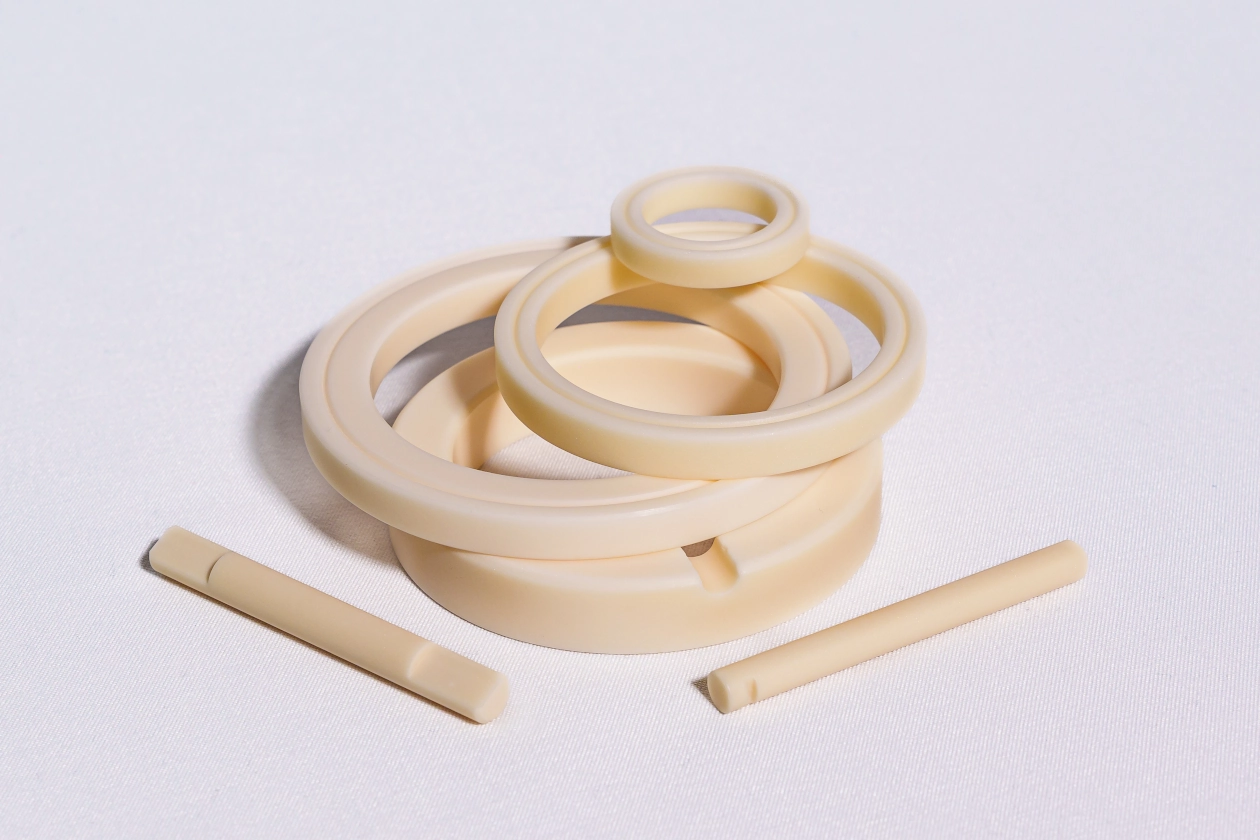
Shafts/Washers
Biocompatible, precise and dimensionally stable
Our shafts and thrust washers are characterised by low sliding resistance, precision surface finishing and dimensional accuracy (<0.001 mm). They usually operate with medium lubrication and retain their robustness and dimensional stability (<0.005 mm) under high loads. Thanks to their excellent running properties at high speeds (40k rpm), low thermal expansion (CTE 1 to 12 10^-6/K), and resistance to corrosion and adhesion, they ensure long-lasting, trouble-free performance in demanding applications. Our ceramics make an important contribution to the medical, pharmaceutical, and food industries thanks to their biocompatibility.
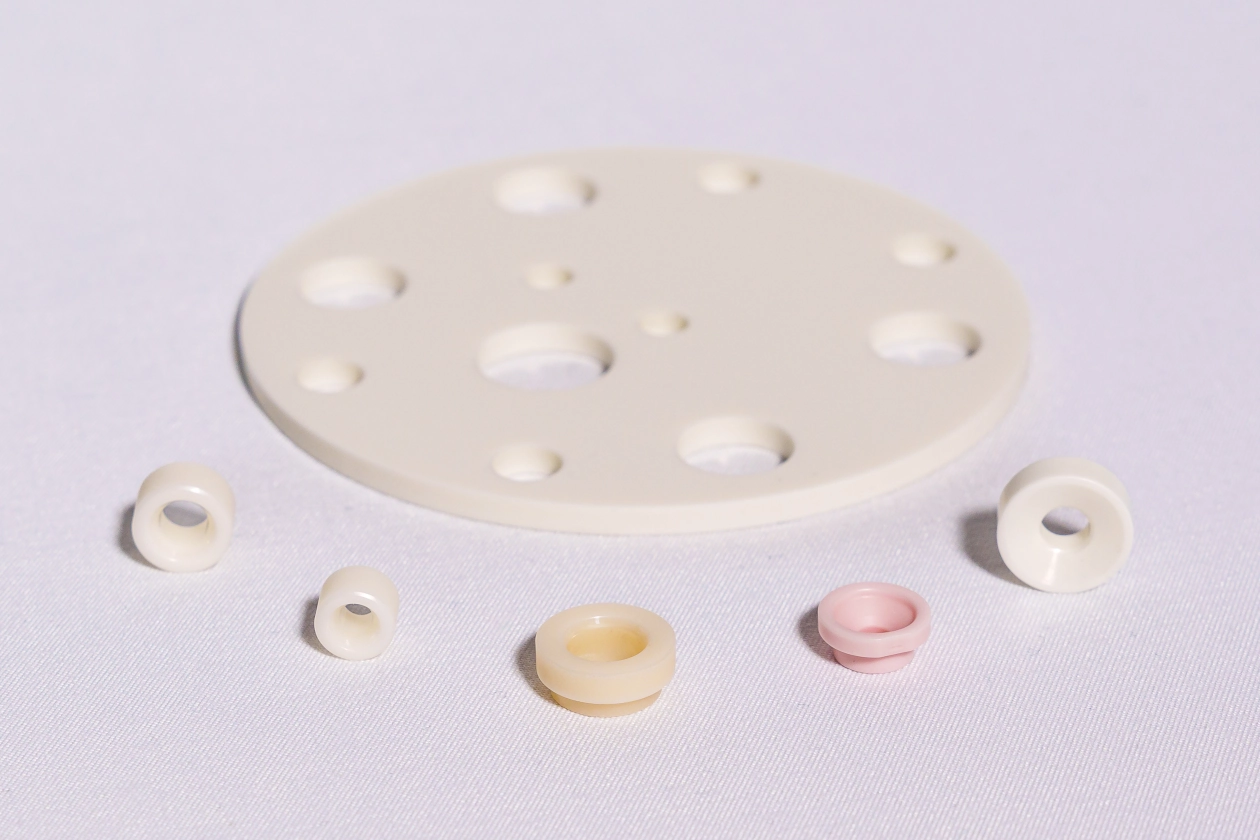
Ceramic valves
for abrasive and corrosive media
Our ceramic valves are characterized by maximum tightness (1*10^-6 mbar*l/s) and complete leak-free operation at high pressures (up to 1,200 bar). They offer excellent wear resistance, outstanding chemical resistance, high temperature stability (approx. 1,500°C), and resistance to abrasive and corrosive media. Thanks to their exceptional impact strength at high frequencies, which occur when the valve is opened and closed, ceramic valves achieve an exceptionally long service life and ensure reliable operation even under extreme operating conditions.
From Material selection
to Series Production
For demanding pump applications, we offer a wide range of high-performance ceramic materials made from high-purity alumina, zirconia, and advanced ceramic composites.
Further information on the materials can be found on the subpage materials.
Not every pump application can be optimally solved with a standard material or standard component. What matters is the interaction between material, component geometry, manufacturing and the specific operating conditions. The targeted use of technical ceramics reduces maintenance requirements and downtime, helping to lower pump operating costs over the component life.
Our experts support you in selecting the right ceramic material, designing the component and developing customised solutions. From the initial technical question and prototypes through to reproducible series production.
FAQ
about the ceramic pump components
Why are technical ceramics used in pump technology?
Technical ceramics are used in pump technology when conventional materials reach their limits due to wear, corrosion, temperature, pressure, or aggressive media. Depending on the material, ceramic components offer high hardness, chemical resistance, thermal stability, good thermal shock resistance, and long-term dimensional stability. Further advantages of appropriately selected ceramic materials include high fracture toughness or low thermal conductivity. These properties contribute to process reliability, a long service life for pump components, and cost-effective operation.
When are technical ceramics a viable alternative to metallic pump components?
Technical ceramics can be a viable alternative, particularly where wear, corrosion, agressive media or high temperatures limit the service life of metallic components. However, a direct 1:1 replacement is not always possible. The suitability for the specific application should therefore be assessed on a case-by-case basis
Which ceramic components does Rauschert manufacture for pump technology?
Rauschert develops and manufactures ceramic components for demanding pump applications, including containment shells for magnetically driven pumps, plungers, gears, valve components and mechanical seals. In addition, bespoke ceramic components can be developed for a variety of pump systems.
What are the advantages of ceramic containment shells in magnetically coupled pumps?
Electrically non-conductive ceramic containment shells prevent eddy current losses, which occur in metallic containment shells when exposed to a magnetic field. This minimises heating and energy losses. At the same time, suitable ceramic materials offer high chemical and thermal resistance
Which industries use ceramic pump components?
Ceramic pump components are used where pumps need to operate reliably with corrosive, abrasive or thermally demanding media. Typical areas of application include:
- chemical and process industries
- pharmaceutical and cosmetics industries
- energy and environmental technology
- mechanical and plant engineering.
How is the right ceramic material selected for a pump component?
The selection of the correct ceramic material depends on the component’s function and the specific operating conditions. Rauschert assesses:
- the conveyed medium and chemical compatibility
- abrasion, pressure and other mechanical stresses
- temperature and thermal cycling,
- required tolerances and the interfaces with adjacent components.
Can ceramic pump components be manufactured to customer-specific requirements?
Yes. Ceramic pump components can be developed for customer-specific geometries, functional requirements and operating conditions. This includes:
- the selection of a suitable ceramic material
- the design of interfaces
- dimensional tolerances
- the evaluation of the expected mechanical, thermal and chemical loads.
What types of pump manufacturers does Rauschert typically work with?
Rauschert supplies technical ceramic components to manufacturers of a wide range of pump technologies and industrial pump systems. Customers include pump OEMs and engineering companies looking for durable, wear-resistant, and application-specific ceramic components for demanding pump applications. Our focus is on pump manufacturers across Europe and in the UK, while we also support customers worldwide. Through our local sales teams and technical contacts in regions ranging from the USA to Asia, we can respond to local market requirements, provide application-specific support, and ensure reliable supply to international customers.
What information is needed for a technical assessment?
The following information is usually required:
- How the system works
- Process medium
- Operating pressure and temperature
- Drawings and any necessary tolerance specifications, where applicable: interface dimensions
What are the typical development and delivery lead times for technical ceramic pump components?
For standard components or established product designs requiring only minor application-specific modifications, typical delivery lead times are around three to four months. Rauschert also works to provide competitive and reliable lead times for international customers, supported by its global sales and technical network. For highly customised ceramic components used in particularly demanding or extreme pump applications, the development process can be significantly longer. Depending on the complexity of the application, such development projects may take one to two years. Once the component design and technical solution have been validated, the transition to series production typically takes around six months.