
Electrical insulation in wet conditions: coating for bearing outer rings
The challenge
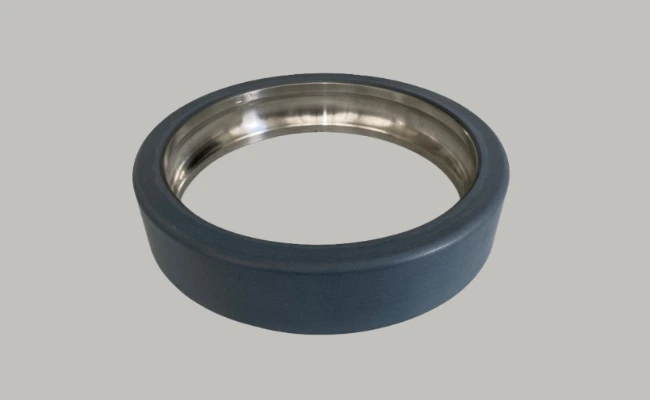
An electrically insulating coating was required for a bearing outer ring that would maintain its insulating performance even under high humidity and direct contact with liquids. During initial testing, surface flashover occurred along the coating surface on the edge regions. The porous structure of the ceramic coating was considered a contributing factor, as moisture ingress can reduce electrical resistance. Final machining can also expose previously concealed pores, allowing liquids to penetrate and compromising the insulating performance.
Our solution
We specifically adapted the process sequence. The coated surface was vacuum-impregnated with a sealant to promote penetration into the interconnected pore structure before final machining. A second sealing step followed machining to close any newly exposed pores. We also improved the electrical test method to cover both the cylindrical surface and the critical edge regions of the component.
The result
Under the specified wet test conditions, no further surface flashover occurred. The result demonstrates how targeted process adjustments and an improved test method can ensure effective electrical insulation under the specified conditions.
Our approach
The material is only part of the picture. Coating process, process parameters, component preparations, post-treatment, final machining, and testing methods must all be tailored to the specific application.
This integrated approach is at the heart of every customised coating solution we develop.
Further technical details on our thermal spraying processes and this development project are available in our technical article published in our technical article published in Ceramic Applications, Volume 14 (2026/3).
Which coating is suitable for your application depends on the requirements in service. We would be happy to discuss these with you. Request a coating consultation!